
Does Tattoo Ink Color Affect Laser Removal Success?
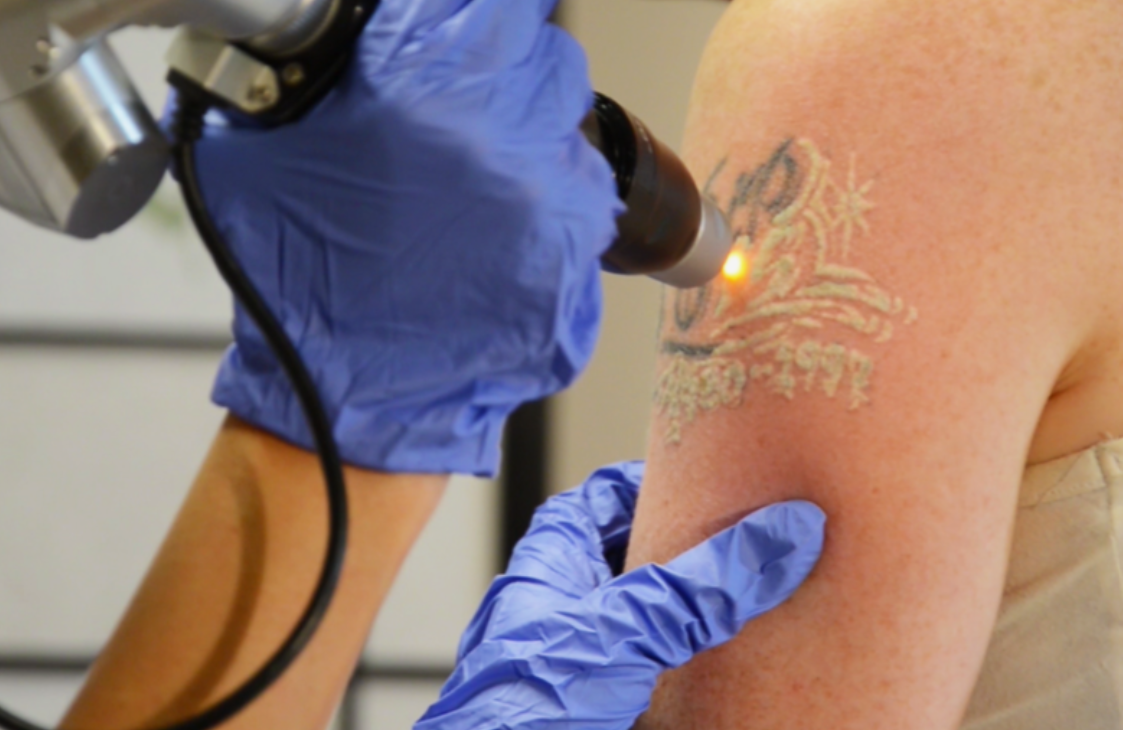
Does Tattoo Ink Color Affect Laser Removal Success? Insights on Treatment Results
Thinking about getting your tattoo removed? The color of your ink can make a major difference in how easily and efficiently it responds to laser treatment. Some colors fade relatively quickly, while others require specialized wavelengths and more advanced technology.
At SF Bay Cosmetic Surgery Medical Group, patients have access to some of the best tattoo removal technology available, giving our medical team greater flexibility when treating black, blue, green, red, and other challenging tattoo pigments. By combining advanced laser technology with individualized treatment planning, we can select settings based on your ink colors, skin type, tattoo characteristics, and treatment goals.
Does Tattoo Ink Color Affect Laser Removal Success?
The color of your ink plays a major role in how well and how quickly a laser can fade it. Black and dark blue are usually the best candidates because they absorb a broad range of laser wavelengths. That absorption allows laser energy to break pigment into smaller fragments that the body can gradually clear.
Lighter and more complex colors can be more challenging. Yellow, orange, green, pale blue, and certain mixed pigments may require specialized wavelengths and advanced laser technology to achieve meaningful fading.
This is where the technology used by your provider becomes especially important. SF Bay Cosmetic Surgery Medical Group uses advanced tattoo removal technology designed to address a wider range of ink colors while allowing treatment parameters to be adjusted according to each patient’s skin and tattoo characteristics.
Multicolor tattoos add another layer, since each pigment may need a different wavelength, and layered or heavily saturated ink can lengthen the series further. That is why a customized plan matters.
At SF Bay Cosmetic Surgery Medical Group, we emphasize individualized evaluation and tailored treatment, because every tattoo and every patient is unique.
How Laser Tattoo Removal Works
Laser tattoo removal is a precise interaction between light energy and pigment. The laser fires a focused beam that the ink absorbs, causing the pigment particles to shatter into tiny fragments. Think of a magnifying glass concentrating sunlight on a speck of dust until it breaks apart. Fragmentation matters because your body can only clear particles small enough for the immune system to handle.
Step 1: Targeting the Pigment
Different inks absorb different wavelengths. Black absorbs nearly all of them, while green, blue, and yellow often need specialized settings. Each session is tailored to your ink color and skin tone to maximize pigment breakdown while protecting surrounding tissue.
Step 2: Immune System Response
The laser does the initial work, but your immune system finishes it. Over the weeks after treatment, cells called macrophages absorb the fragments and carry them away through the lymphatic system. Your body’s response ultimately determines how quickly and completely the tattoo fades.
Step 3: Multiple Sessions
No single session removes all of the ink. Most patients see noticeable progress after about 6 to 10 sessions, spaced 6 to 8 weeks apart, which gives your skin time to heal and your immune system time to clear debris. Fading per session generally ranges from about 10% to 25%, so patience matters. Removal is a bit like peeling an onion: you will not clear every layer in one pass.
Skin type affects both safety and speed. Lighter Fitzpatrick types (I to III) tolerate a wider range of lasers with fewer side effects, while darker types (IV to VI) need more careful calibration of energy and wavelength to avoid discoloration. A skilled provider adjusts settings such as pulse duration and spot size to target pigment without harming healthy skin.
At SF Bay Cosmetic Surgery Medical Group, treatment planning is guided by Dr. Laurena Fotsing, a board-certified physician, cosmetic surgeon, and the practice’s Medical Director. Dr. Fotsing has advanced training in laser technologies and takes an individualized approach to care, considering factors such as skin type, tattoo characteristics, and treatment goals when developing a personalized plan.
Comparing Different Ink Colors
Here is how the common colors compare, with typical session ranges.
- Black: the easiest to remove. It absorbs virtually all wavelengths, and a 1064 nm Nd:YAG laser breaks it down efficiently, typically in 5 to 10 sessions.
- Dark blue: responds well, though absorption is more moderate. Expect about 6 to 10 sessions with careful wavelength tuning.
- Red: moderate difficulty, typically 6 to 10 sessions. Mild irritation or temporary color changes can occur, so careful aftercare helps prevent prolonged redness or hyperpigmentation.
- Green: difficult. It reflects much of the laser light and often calls for picosecond technology, with roughly 8 to 15 sessions and moderate clearance on average.
- Yellow: the most difficult. It absorbs very little laser energy, often needs 10 to 20 or more sessions, and may leave some residual color.
Tattoo age and ink density interact with these challenges. Older tattoos tend to fade naturally, so they often respond faster than fresh, dense, or heavily layered ink. Areas with strong blood flow, such as the chest or face, may also respond better because circulation helps carry away fragmented pigment.
That is why a personalized consultation is essential. At SF Bay Cosmetic Surgery Medical Group, we evaluate your tattoo alongside your skin tone, since darker skin types require adjusted settings to avoid pigmentation issues, and we build a plan that supports both safety and results.
Black Ink vs. Color Inks
Black ink behaves differently from colored ink largely because it absorbs a broad spectrum of light and converts that energy into heat, breaking the pigment into fragments the immune system can clear. The result is usually fewer sessions, often five to ten, with clearance rates frequently above 80%. Its consistent behavior also lets providers fine tune fluence and pulse duration for effective, lower risk treatment.
Colored inks require a different approach because of their varied chemical makeup. Red often needs more sessions than black but fades well in most cases. Blue and green absorb common wavelengths less efficiently and often require 755 nm Alexandrite or 1064 nm Nd:YAG wavelengths, with more moderate clearance and treatment that can extend beyond a year.
Yellow, orange, and pale green are the hardest. Their weak absorption calls for picosecond lasers, and even then they may only partially fade. Choose a provider experienced in color specific protocols who adjusts for ink type, skin tone, tattoo age, and location to reduce the risk of hyperpigmentation or hypopigmentation.
Factors Influencing Removal Results
- Tattoo age: sunlight and natural fading weaken pigment over time, so older tattoos are generally easier to remove.
- Skin tone: lighter tones tolerate a wider range of wavelengths, while darker tones need gentler, carefully adjusted settings, which can mean more sessions for certain colors.
- Ink density and depth: thick or layered ink sits deeper and needs more energy and more sessions.
- Location: the face, neck, and chest often clear faster thanks to better circulation, while hands and feet tend to fade more slowly.
- Overall health: hydration and a healthy immune system support clearance between sessions.
These variables explain why no two removals proceed identically. A thorough initial assessment of your tattoo, skin tone, and health history allows your provider to build a plan suited to your goals.
Advanced Tattoo Removal Technology Matters
Tattoo removal results depend not only on the tattoo itself, but also on the technology used to treat it. At SF Bay Cosmetic Surgery Medical Group, we emphasize access to some of the best tattoo removal technology available because advanced laser systems provide greater precision when targeting different pigment colors and tattoo characteristics.
Modern picosecond technology delivers extremely short pulses of laser energy measured in trillionths of a second. These rapid pulses can break tattoo pigment into extremely small fragments, making it easier for the body’s immune system to gradually clear the treated particles.
This technology is particularly valuable when treating stubborn colors such as blue, green, and certain lighter pigments that may not respond as efficiently to older laser systems. Advanced wavelength options also allow the medical team to more precisely match the treatment approach to the colors present in the tattoo.
Technology also matters for patient safety. Precise energy delivery, customizable treatment settings, and integrated cooling can help protect surrounding skin while targeting tattoo pigment. Treatment parameters can be adjusted based on skin type, ink color, pigment density, tattoo depth, and previous treatment history.
At SF Bay Cosmetic Surgery Medical Group, Dr. Laurena Fotsing and the medical team combine advanced tattoo removal technology with individualized evaluation and medically informed treatment planning. Dr. Fotsing is a board-certified physician and cosmetic surgeon with advanced training in laser technologies, allowing patients to receive care that pairs sophisticated equipment with professional clinical oversight.
Find Out What Your Tattoo Removal Plan May Look Like
Tattoo removal is not one-size-fits-all. Ink color, tattoo age, pigment density, location, and your skin type can all influence how your tattoo responds to treatment.
SF Bay Cosmetic Surgery Medical Group combines individualized treatment planning with some of the best tattoo removal technology available to address both common and difficult tattoo colors. Dr. Laurena Fotsing and the medical team take an individualized approach to laser treatments, helping patients understand their options and set realistic expectations based on their unique needs.
Ready to find out what advanced laser tattoo removal may be able to achieve for your tattoo? Schedule your consultation with SF Bay Cosmetic Surgery Medical Group in San Ramon or call 925-275-9333 to get started.
Frequently Asked Questions
Which tattoo ink colors are the easiest and hardest to remove with laser treatment?
Are there any new technologies improving removal of difficult ink colors?
What are the risks or side effects of removing certain ink colors?
How do different laser types target specific ink colors?
Does the age or depth of the tattoo influence removal success by color?